ANGIE CERQUERA
TEMPLATE 1
Students Name: Angie Daniela Cerquera Soria
Group #: 551027_4
Initial: First Activity – To identify a
Research Problem and review the Literature
1.
Identifying a Research Problem:
|
Lack
of parental involvement in their children's education leads to poor
performance and defiant behaviors |
Afterward, then you had stated your
research problem, you must develop the following aspects completing this:
·
You must specify your research problem in
one (1) paragraph:
|
The
main responsibility for the education of the children is the parents of
course, the institution plays a fundamental role in the task of educating.
The main cause that is generated is the family environment since it favors a
low performance in students’ parents are limited to trust their children and
often the role of parents is affected by various causes, such as a job for
long hours that is not enough to cover household expenses limiting the time
and delivery of education to their children.
However, some parents prefer to disassociate themselves from their
parental responsibility. The
question that should be asked is: What are the causes of parents' lack of interest in the student's education? How does the indiscipline of students manifest itself in the academic environment? |
|
From the framework of education and throughout
history, it has been created in education an accompaniment of teachers in a
positive and motivating way as it is logical, in the family the main axis of
the accompaniment is the social institution. Today, we are living in a
society lacking needs, values, and criteria in which the academic behavior of
students has deteriorated, the question is why there is such a problem of
indiscipline in students, what are parents doing to fulfill the role of
training their children? The approach that is observed is that the
disinterest of parents is becoming a serious cause that is evident in some
aspects. Parents tend to be of permissive formation they are compulsive
workers there is no economic solvency absent or controlling parents who worry
about complying with rules and not informing their children in values and
respect. Teachers are always available to those students who
have problems, without forgetting two important factors that are key to
student motivation: residence and self-esteem, and new learning styles and
strategies so that they can continue in quality education. |
·
You must describe the need to study it in
one (1) paragraph.
|
The concern that is given in the educational
community is the disinterest of parents as it is a serious problem and
therefore the teacher tries new strategies to help and motivate students in
the difficulties of their subjects. As a teacher, the family and the school should work
together in the formation of the student so that the child achieves and
understands the value of the study. |
Reviewing
the Literature
You must only choose at least the three (3) literature for developing
the following aspect completing the Template 1 (You can find it at Practice
Environment):
|
The
theory of meaningful learning: a review applicable to the current school. Meaningful
learning is questioned and requires personal involvement, a reflective
attitude towards the process itself and the learning content, where it says
what we want to learn why and for what to learn it meaningfully. According to
Moreira (2000b 2010), It is through critical meaningful learning that the
student will be able to be part of his culture and at the same time, not be
subjugated by it by its rites myths, and ideologies Moreira 2005 pg. (88). Thus,
it has had to face new research in cognitive psychology, for Ausubel he
insists on the interaction of new knowledge, where neither the process nor
the conditions and characteristics of their interaction are taken into account
thus the concepts of the mental model have been incorporated to understand
the cognitive models. Mental
models are characterized by their explanatory and predictive power allowing
the apprehension of a new situation. Mental models and schemes where they
establish a dialect interaction in such a way that a cognitive structure is
built what is meant is that it´s a broader and well-structured scheme. Learning
theory in the educational context. Yolanda Heredia, Ana
Lorena Sánchez. Technologic
of Monterrey. Learning
theories often start with the questions that researchers ask, these are posed
to better understand the world as well as to solve practical problems or when
there is contradictory evidence about certain phenomena. It
is important to know that learning theories influence people's views about
nature and how they influence their views about learning. A teacher who
believes that knowledge is socially constructed will probably select
strategies such as discussion and team problem solving while a teacher who
thinks that knowledge is absolute must be taught by the learners will feel
better dictating a lecture on the subject, so each teacher must know the own
conception that is based on the epistemology of learning, this will help to
improve their way of teaching perhaps be more flexible where it improves
their teaching practice. These
prescriptive theories describe conditions where instruction facilitates
learning. Reigeluth
(1983,1999) Learning environments should be prepared carefully, and general principles should be followed rather than dealing with precepts directly. Thus,
it´s important to describe what happens in a classroom as in academic performance where it is the result of the applications of assessment instruments. It can be categorized as learning and where it is necessary to
refer to students' scores on standardized tests that are used in schools to
have a better academic performance. Behaviorism, Cognitivism, and Constructivism: A Comparison of Critical Issues from an Instructional Design Perspective Peggy A. Ertmer and Timothy J. Newby Performance Improvement Quarterly, 1993, 6(4), 50-72. Behaviorism: Equates to learning observable
behavior the frequency of those behaviors is achieved when an appropriate
response is exhibited. It
focuses on the importance of behaviors where responses that are followed by a
reinforcement that has a higher probability is maintained it does not
attempt to determine the mental processes that the learner needs to use. The student is characterized in the
conditions of the environment and not as in other theories, where it is
considered an active position in the discovery of the same. Cognitivism: This emphasizes the role of
environmental conditions in facilitating learning. This
learning is linked not with what students do but with what they know and how
they acquire it (Jonassen 1991). This
approach focuses on the mental activities that lead to a response and
recognizes the processes of mental planning, goal formulation, and strategy
organization. Teachers
are responsible for the student's optimal organization. Constructivism: This indicates that human knowledge is
not received passively it´s processed and constructed actively by the
individual who performs the activity of knowing the cognitive system easily
adapts gradually and modifies the object of study on which it acts, which
allows the expert (student or learner). Most
psychologists consider the mind as a tool and believe that the mind filters what comes into the world to produce its unique reality (Jonassen 1991). Also,
constructivists don´t share with cognitive or behavioralists the belief that knowledge is independent of the mind and can be represented within the learner. They also do not deny the existence of the real world, although they
maintain that experiences are born. |
TEMPLATE 2
Students Name: _Angie Daniela Cerquera___
Collaborative group #: 551027_4
Unit 2: Second Activity
– To specify a Purpose for Research and collect Data
1. The purpose of your research:
The purpose of research consists
of identifying the major intent or objective for a study and narrowing it into
specific research questions or hypotheses, in so doing, you
must write two (2) paragraphs specifying a purpose for your chosen educational
problem in first activity.
All these examples
were taken from “Developing Oral Skills through Communicative and Interactive
Tasks” Dorelly Gutiérrez Gutiérrez (2005):
|
Lack
of parental involvement in their children's education leads to poor
performance and defiant behaviors |
|
The student's academic performance problems will
always affect the quality of education in several opportunities the factor of
parents' disinterest is involved where students face learning problems, among
them the oral expression that develops the daily life and knowledge through
schooling. Based on this, we seek to relate the knowledge and
components of the language in which we seek to focus our efforts and the
strengthening of skills. |
|
A teacher constantly identifies the priorities of
students as well as analyze the knowledge of students identify learning
problems presents some sensory impairment, cognitive or simply are
alterations of personality. A teacher in the future will try to guide the
student in the best way because his objective will be to impart all his
knowledge throughout his learning, developing his abilities and bringing
change to the student. Finally, it´s necessary that the teacher evaluates
and encourages the student from a learning style, so each student determines
the main performances we know that a student doesn´t learn in the same way as
the other therefore it´s necessary to apply learning strategies that are more
didactic and dynamic to make it easier to teach with students. |
2. Research questions:
You must write two (2) research questions:
|
To what extent can parental disinterest affect their
children's academic performance? |
|
Why does
student indiscipline manifests itself in the school environment? |
3. Collecting Data
You
must design one survey with ten (10) questions and their options respectively,
all in full English:
|
1. Psychological problems always affect academic
performance. Is the management given by parents to this problem the right one
to improve their school level?
Yes ____ No ____ Why
2 The
separation of parents is very recurrent do you think this can affect the performance of students? Yes ____ No ____ Why
3. Is the
learning of students who only live with one parent, either mom or dad,
affected? Yes ____ No ____ Why
4. Do you
believe that the socioeconomic factor of the home affects a student's
performance? Yes____ No_____ Why______ 5.Can the
advanced age of the parents influence the learning of their children to
maintain a good academic level?
Yes____ no_____ Why_____
6. Do poor
study habits influence students' meaningful learning? Yes ____ No
____ Why
7.The loss of a
loved one generates strong emotions what should the parent do for a student
to improve his/her performance?
8. What do you
think is the cause of disinterest in parents? A. No time B. Your child
is already responsible C Doesn't have
the necessary knowledge D Doesn't see
the need to check notebooks
9 What
decisions do you usually make as a parent if your child doesn't do homework?
A You reward
him/her B You punish
him C You talk to
him/her to make him/her see reason D. You force
him to study
10. Children
have full confidence in their parents Yes ____ No
____ Why_____
|
|
|
TEMPLATE 3
Student’s
Name: Angie Daniela Cerquera
Collaborative
group #: _551027_4
Unit 3: Third
Activity – To analyze and interpret the Data
1. Analyzing and Interpreting
the Data
This
survey responds to an academic exercise to gather information about the
experience of teachers and professionals in other areas who have had students
and have children.
Implement
strategies for teaching and demonstrating why students feel alone in their
academic performance.
Research
questions
Lack
of participation involvement in their children's education leads to poor
performance and defiant behaviors
Student
academic performance problems will always affect the quality of education in
several opportunities the parental factor.
Disinterest
is involved when students face learning problems between oral expression that
develops daily life and knowledge through schooling.
RESULTS
|
 Here it´s shown that parents aren´t handling the
psychological problems of students in the best way where 40% believe that
they are affected and therefore do not perform in their learning. The answer is very clear here 90% of respondents
agree that parental divorce greatly influences their children's academic
performance. Leaving 10% who neither agree nor disagree with the
separations. 
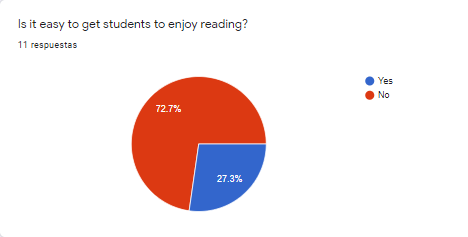
 The 10 % don´t agree that learning is affected and
40% believe that learning is affected.  In the following graph, 60% of the respondents believe that the socioeconomic factor may affect the students' performance.
On the other hand, 30% believe that it may affect learning.

The survey with 60% believes that perhaps older age
influences student learning and 30% are neutral and believe that education
may or may not influence this.  This question is open-ended, so we see some questions in English and others in Spanish. Many of the respondents believe that students should be given love support with a professional and maintain constant communication with them.
 In the yellow graph, 40% believe that parents don´t
have the necessary knowledge to attend to their children's needs and
evidently, 10% of the surveyors believe that parents are not attentive to
their children because for them it is not necessary to check the notebooks.
 Evidently, the blue graph doesn´t come out because students
should not be given a reward for not doing work. This shows that 50% of the surveyors believe that
parents should talk to their children to make them see reason and do their
academic activities.  Here clearly, I know that the yellow graph with 60% believes that perhaps the students don´t have confidence in the parents but it could be that the parents aren´t attentive to them and that is why they do not feel confident. |

|
CONCLUSIONS (1 PARAGRAPH) In this activity, there are very important contributions to the research proposal where it´s necessary to interact and understand the students by offering motivation and listening to the student. In such a way that the students feel good at the time of imparting their learning and can have a better academic performance. 10 people were interviewed
5 of whom are public school teachers and 5 university teachers between 25 and
35 years of age. |
|
DISCUSSION
(1 PARAGRAPH) 90% of those interviewed believe that parents should support their children and listen to them regularly, whether or not they are in vulnerable conditions. It´s important that students feel loved by their parents and that parents attribute to the teaching process. |
|
REFERENCE
|

Comentarios
Publicar un comentario